There is a version of many of us that used to show up reliably, right around the second or third drink. It’s the borrowed identity of how gray area drinkers use alcohol to become someone people will like. I know for me, it was the funnier, louder and more outgoing version. And for a long time, that version felt like ‘the real’ one, the one people actually liked, the one worth being.
Ouch.
And the sober version? She was boring…so I thought.
I have been thinking a lot lately about the psychology behind this, because it’s far more layered than most people realize. It’s not just about alcohol. It’s about what we build when we do not yet trust ourselves to be enough as we are. Psychologists have a name for it: the borrowed identity. And if you have ever used a drink, a role, a title, or a persona to get people to like you, this one will resonate.
When the Performance Becomes the Person
British psychoanalyst D.W. Winnicott spent decades studying what he called the true self and the false self. His framework, still widely used in clinical psychology today, describes the false self as a defense mechanism we develop, often early in life, to shield our authentic self from rejection, criticism, or the simple fear of being seen and found wanting. The false self becomes a socially acceptable facade that conceals our true thoughts, emotions, and vulnerabilities, and in the context of interpersonal relationships, it serves as a shield, masking genuine sentiment and presenting a version of ourselves deemed more acceptable or palatable to social expectations.
That sounds abstract until you map it onto real life. Think about the guy who becomes the life of the party the moment alcohol hits his bloodstream. Or the high-achiever who performs competence and control so thoroughly that even the people closest to him have no idea he is exhausted or lost. And how about the leader who has been so good at being what his environment needed that he genuinely cannot tell you who he is when no one is watching?
People with a very strong false self persona can, according to Winnicott, go on to live perfectly successful lives, but lives that deep down feel unsatisfying or phony. They can be highly accommodating to other people’s expectations in the hope of connecting, but often come across as performative rather than genuine, resulting in less authentic and ultimately less satisfying relationships.
You can be the most likable person in the room and still feel profoundly alone in it.
The Validation Loop
Buckle in because here’s where it gets interesting, and honestly, a little uncomfortable.
When you seek approval and receive it, you start to display those qualities more consciously, not because you are being fake, but because the approval feels good and you want more of it. Over years, those externally reinforced traits become your identity. The performance becomes the persona. And the cost of that trade is steep: you lose access to parts of yourself that were never displayed for anyone. The interests you never pursued because they did not get a reaction. The version of you that shows up at 2 a.m. when no one is watching. That person gets crowded out by the curated version.
Psychologists call the result “contingent self-esteem,” a self-worth that is experienced as entirely dependent on what other people think of you. Without the mirror of external validation, you don’t know who you are.
This is exactly what alcohol can enable for so many gray area drinkers. It is not that the drink is the problem in isolation. It’s that the drink becomes a shortcut to a self that feels acceptable. Confident. Liked. Worthy. And when the shortcut is removed, the original question remains unanswered: who am I when I am not performing?
I sat with that question for a long time after I stopped drinking in 2016. I didn’t have the term “gray area drinking” yet, but I knew something had to change. And the uncomfortable truth I kept circling back to was that I had spent YEARS being very good at performing a version of Kari that got approval. When I removed alcohol from the equation, I had to start learning who “the actual Kari” was. That process isn’t obvious and it’s not a single moment of revelation. It is slow, and it asks more of you than any challenge you will face in business or relationships, because you cannot outsource it and you cannot rush it.
The Thing About Alcohol and the False Self
Research published in Psychology Today notes that alcohol use in young people often arises not from a deep desire to drink, but from peer pressure and aspirations to belong, a way of conforming to social norms rather than an expression of any true self. For many high-performing men and women, that pattern doesn’t stop at 22. It follows them into boardrooms, into social events, into client dinners, into the exact moments where they feel most seen and most exposed at the same time.
And here’s what alcohol does in those moments, according to research from the National Institute on Alcohol Abuse and Alcoholism: it does not reveal your true self. The way you react to external factors while drunk is exaggerated because you have lost a lot of your impulse control and awareness. The version that emerges is not more you. It is a heightened, disinhibited version of whatever role you have been rehearsing. A louder, less filtered performance of the persona you have already built.
So the confident, charismatic person you became after a few drinks? That wasn’t the real you finally coming out to play. That was the borrowed identity, minus the inhibition. The real you, the one with the actual interests and the actual fears and the actual opinions, had been waiting patiently the whole time.
What It Looks Like to Reclaim It
The good news, (and there genuinely is good news here!), is that the false self is not permanent. False self-adaptations may have helped you achieve success, a sense of belonging, or safety during times when you needed them, but they are not the entirety of who you are. Beneath the polished exterior lies a more profound truth, often more vulnerable, and much more alive.
Reclaiming the real self is not about tearing down what you have built. It is not about walking away from your professional identity or rejecting every version of yourself that has ever shown up for social approval. It’s more nuanced than that. It starts with noticing. Noticing when you are choosing a behavior to get a reaction versus because it is genuinely true for you. Noticing when you reach for something external, whether that is a drink, a title, a laugh, or a persona, to fill a gap that only you can actually fill.
A few places to begin:
Get honest about what you are performing and for whom. This is not a shame exercise. This is curiosity. What roles have you been playing so long that they feel like your real personality? What would you stop doing tomorrow if no one was watching and no one was keeping score?
Practice tolerating invisibility. High achievers often find this one the hardest. The approval loop is deeply wired. When you step out of performance mode, especially at first, the silence can feel like rejection. It is not. It is just quiet. Sit in it.
Try free writing. This one came up in a conversation I had recently that reminded me how valuable it is. This practice, now being used in communities from Minneapolis jails to corporate teams, where you choose one random word and write without stopping for five to ten minutes. No editing. No judgment. No lifting the pen. What emerges is often something your performing self would never say out loud. It is one of the fastest ways to hear from the version of yourself you have been drowning out.
Let the real answer take time. The question of who you actually are, underneath the persona, is not a weekend retreat question. It is a years-long conversation with yourself. That is not a problem. That is the whole point.
A Note on Gray Area Drinking and Identity
If you’re somewhere in the gray area with alcohol right now, one thing I want you to sit with is this: the discomfort you feel at the thought of removing it often has less to do with the alcohol itself than with what the alcohol has been covering. The version of you it has been standing in for. The question it has been keeping you from having to answer.
That question is not a threat. It is actually an invitation. And the answer, when you slow down enough to hear it, tends to be far more interesting than the performance ever was.
This week’s episode of Beyond the Gray goes deep on exactly this territory. My guest, Billy Lahr, lived years inside a borrowed identity he had built entirely around drinking, and what he discovered on the other side of nearly a 1000 alcohol-free days is something I think you will want to hear. Episode 14 is out this Tuesday, wherever you listen to or watch podcasts.
 |
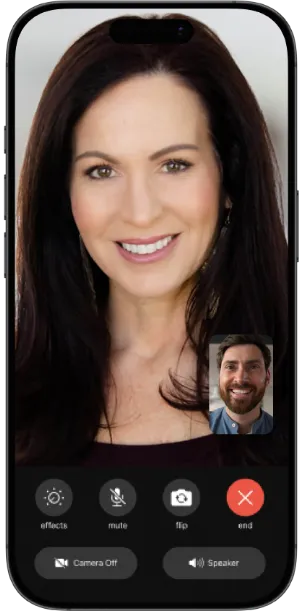
Who you believe you are is your reality. And isn’t it time you decide who is leading? The real you, or the false you? If you’re unsure who that person really is and want to find out, let’s schedule some time to talk. I’d love to help you discover who that is.
Here’s to living beyond the gray,
Kari
Ready to talk about your real identity and who God has called you to be? Schedule a call with me HERE.