
This week we have a guest blogger, Keli Maire. She is the creator of the Sober Feast and has a passion for recipes, food pairings and all things non-alcoholic. You can read more about Keli and her mission on her website, https://thesoberfeast.com/

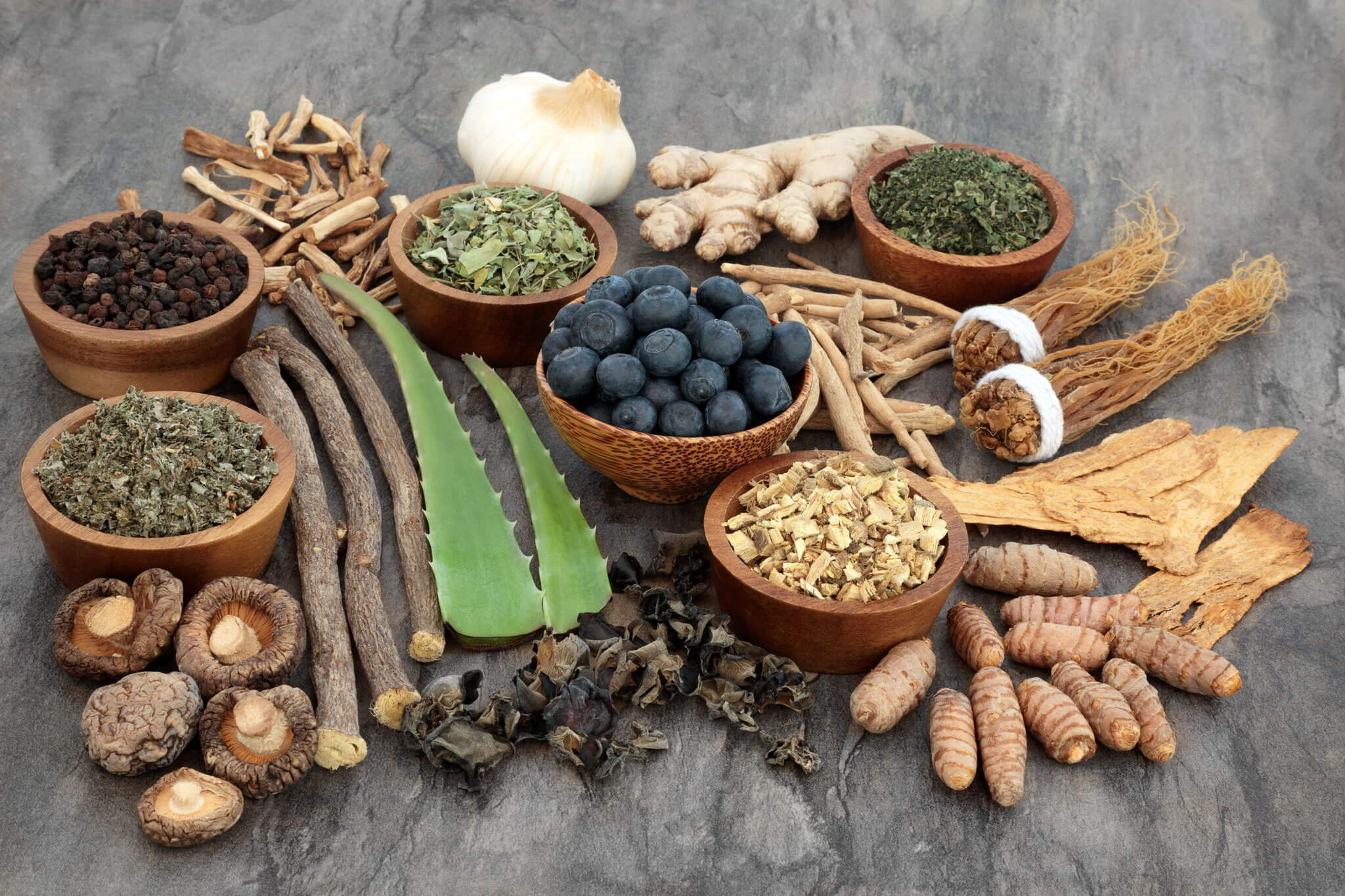
If you’ve been looking at healthier options for non-alcoholic drinks, you might have read about adaptogens. Adaptogens are plant-based substances that are said to increase the “state of non-specific resistance” in stress.[1]It’s believed that adaptogens have the capacity to affect bodily functions and systems to protect against stressors and enhance our health. Adaptogens aren’t new; they’ve been used for hundreds of years and studied since the early to mid-1900s. It’s only recently that we’ve begun to see these substances listed as healthful ingredients in modern drinks and health supplements. If you’re looking for some help to balance hormones and settle stress, you might want to learn more about adaptogens.
Research has shown[2]that these herbal aids can help our body recover from physical or mental stress. They may also help increase immunity and well-being by fighting fatigue, boosting mental performance, and helping to battle depression and anxiety. Not everyone gets the same physical or mental effects from adaptogens, but many people feel better knowing that they’re ingesting a healthier mix of ingredients than known stressors such as alcohol. Now, I’m not a health professional, but from what I understand from reading a few scholarly articles, here’s how adaptogens work. In general.
When we have stress, our brains put us through a 3-stage response called General Adaptation Syndrome[3]which begins with an alarm reaction, then a resistance stage, followed by exhaustion. It sounds like a big deal, but it isn’t usually very profound. These stages often happen without us knowing, feeling or recognizing them.
The alarm reaction stage happens when a stress signal is sent to the brain and hormones are released to produce the “fight or flight” response.
At the resistance stage, the body tries to put itself back to its normal even-keel state like it was before the stress began. It’ll try lowering the number of hormones produced and returning a racing heart back to its regularly scheduled beating program.
The exhaustion stage is when our energy has been depleted from all that effort put into trying to get ourselves back to “normal.” We might feel tired, depressed and/or anxious at this stage. Of course, we have different stressors all the time. When we’re at our “normal” stress level, we probably don’t even think about these changes happening unless we start having health issues. It can be a vicious cycle that goes on and on until we just can’t seem to cope anymore.
There are many ways to cope with stress. Everyone has their “thing.” Some use drugs or alcohol. Some exercise. Some eat healthily. Some try to get more sleep. Some of our coping mechanisms are good; others are unhealthy. No judgment here. I’m trying to find my own way around stress, as is everyone.
Since studying my relationship with wine, I’ve learned that alcohol was actually adding more stress to my life. What felt like a good “fuzz” and what I was using to help me fall asleep was actually making me more anxious and less rested.
In my search for good replacements for alcohol, I’ve come across several products with adaptogens. One of my favorites is Kin. Kin is a beverage that’s meant to be enjoyed in social settings, as alcohol would be. It contains adaptogens, nootropics (substances that may enhance cognition and memory) and Botanics that aim to “lift the mind and relax the body to open the spirit to the people around you.”
[4] Kin High Rhode can be sipped straight up on ice or mixed with just about anything to make yummy and beautiful drinks. There is a bubbly version that’s crisp and delightful. And now they’ve come out with a nighttime drink called Dream Light that’s meant to be a nightcap that induces calmness by reducing cortisol levels as part of your bedtime wind-down ritual.
I like all three of Kin’s products. Here are some great recipes to try from the Kin website.
KIN AND TONIC
To Gather
2 oz of Kin High Rhode
0.5 oz of lime juice
1.5 oz of tonic water
Edible glitter (optional)
Lime (optional)
Cubed ice
To Make
Pour Kin High Rhode over ice in a highball glass. Add lime juice and stir for 10 seconds. Add a scoop of fresh ice and top with tonic. Serve with optional edible glitter and a lime wheel.
Enjoy To
Connect with friends old and new
KIN CIDER
To Gather
2oz Kin High Rhode
2oz apple cider
5 dashes of palo santo bitters
1 bar spoon of spicy maple syrup
Dried chili pepper
Cubed ice
To Make
Add ice to a shaker. Pour High Rhode, apple cider, spicy maple syrup, and palo santo bitters into the shaker. Shake for 30 seconds. Strain through a fine mesh strainer and serve straight up. Garnish with a single chili pepper, woken up by hand to make the most of its heat.
Enjoy To
Spice up the conversation
Perhaps you can incorporate adaptogens to your non-alcoholic lifestyle. Have you tried them previously? If so, share your thoughts. Let’s keep the conversation moving in the right direction. Send your comments here.
[1] Panossian, Alexander & H, Wagener. (2011). Adaptogens. A Review of their History, Biological Activity, and Clinical Benefits.. Herbal Gram. 90.
[2] Panossian, A.; Wikman, G. Effects of Adaptogens on the Central Nervous System and the Molecular Mechanisms Associated with Their Stress—Protective Activity. Pharmaceuticals 2010, 3, 188-224.
[3] Dimsdale, J. E. (2008, April 1). Psychological stress and cardiovascular disease. Journal of the American College of Cardiology, 51(13), 1237–1246
ncbi.nlm.nih.gov/pmc/articles/PMC2633295/
[4] Kineuphorics.com